BTA2023
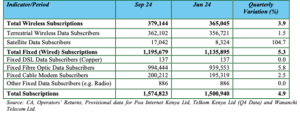
 Less than two years since its debut, Elon Musk’s Starlink has made remarkable strides in Kenya, amassing over 16,700 subscribers by September 2024, according to the latest quarterly data from the Communications Authority of Kenya (CA).
A Meteoric Rise
Starlink’s journey in Kenya has been nothing short of extraordinary:
- June 2023: 405 subscribers
- March 2024: 4,808 subscribers
- June 2024: Over 8,000 subscribers
- September 2024: 16,700+ subscribers
This rapid growth has propelled Starlink to claim 1.1% of the fixed data subscriptions market, overtaking Liquid Telecommunications Kenya and Vijiji Connect.
Market Leaders
While Safaricom remains the dominant player with 575,000+ subscribers (36.6% market share), Starlink’s expansion is reshaping the competitive landscape. Other key players include:
- Jamii Telecommunications: 24.4% market share
- Wananchi Group: 16.8% market share
- Poa Internet: 12.6% market share (198,609 subscribers)
- Mawingu Networks: 2.8% market share (44,311 subscribers)
Key Drivers of Starlink’s Growth
Starlink’s rise has been fueled by strategic initiatives:
- Price Reductions: In April 2023, Starlink slashed installation kit costs from KSh 89,000 to KSh 45,000 for a limited time.
- Rental Plan: Introduced in August 2024, this option allowed users to rent hardware kits, reducing the upfront cost of access.
- Customer Acquisition Campaigns: Aggressive marketing helped drive a 104.7% increase in satellite internet subscriptions during the reference period.
Technological Advancements
To enhance user experience, Starlink recently established a ground facility in Nairobi, reducing latency from 120ms to under 30ms. Additionally, the company plans to launch direct-to-device satellite internet, eliminating the need for hardware kits and significantly reducing onboarding costs.
Regulatory Challenges
As Starlink’s influence grows, it has faced pushback from competitors like Safaricom, which raised concerns about the impact on regulatory oversight. The CA has proposed new licensing fees:
- KSh 250,000 every 15 years for complex network equipment.
- Annual operating fee: 0.4% of turnover, which could lead to higher costs for consumers.
Industry Response
Starlink’s aggressive growth has triggered a wave of competitive responses, including price cuts and speed boosts by other ISPs. However, smaller players may struggle under the weight of the new regulatory fees, potentially reshaping Kenya’s internet market further.
A Game-Changer for Kenya
Starlink’s rapid ascent highlights the growing demand for satellite internet in Kenya. By addressing affordability and performance challenges, Starlink is not only disrupting the market but also setting the stage for innovation in the country’s internet ecosystem.